• Skip to main content
  • Skip to footer

SOHMA: The Path to Tai Chi & Qi Gong Mastery

SOHMA (School of Healing Martial Arts): The Path to Tai Chi & Qi Gong Mastery. Transform your health with expert training. Join our community and start today.

  • Tai Chi
    • Tai Chi Benefits
    • Tai Chi Instructors
    • Online Tai Chi Certification Program
  • Physical Medicine
    • Chiropractic Care
      • VA Authorized Care
      • Sports Medicine
      • Digital X-Rays
    • Physiotherapy
    • Spinal Decompression
    • Laser Therapy
    • Shockwave Therapy/Piezowave
    • Cupping Therapy
    • Acupuncture
    • Herbal Pharmacy
    • VA Authorized Care
  • Blogs
  • About
    • Our Providers
    • Tai Chi Instructors
  • Contact Us

Uncategorized

Can You Teach Tai Chi Online? Skills and Training Required

February 5, 2026 by Dr. Daniel Hoover

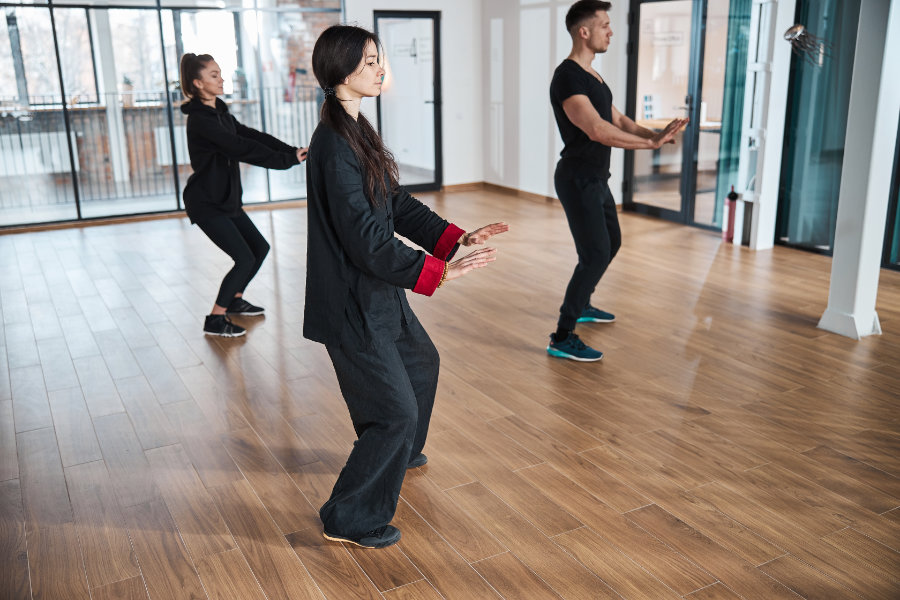
The idea of teaching Tai Chi online once seemed impractical, even contradictory to the art’s deeply embodied and relational nature. Yet in recent years, online instruction has become not only viable but increasingly effective when done correctly. For instructors considering this path, the question is no longer whether Tai Chi can be taught online, but what skills and training are required to do it well and responsibly. Teaching Tai Chi remotely demands a distinct set of competencies that go beyond traditional in-person instruction.

Why Online Tai Chi Teaching Works

Tai Chi’s slow, deliberate movements and emphasis on awareness make it particularly well-suited for remote learning. Unlike high-impact or fast-paced disciplines, Tai Chi allows students time to observe, adjust, and integrate instruction. Online formats also enable students to practice in their own space, often with greater consistency and comfort.

For instructors, online teaching expands reach beyond geographic limits, allowing connection with students worldwide. However, this accessibility also raises expectations. Without physical presence, instructors must rely on clarity, observation, and communication more than ever.

Clear Demonstration Becomes Essential

In an online environment, students rely heavily on what they see. This means instructors must demonstrate movements with precision, consistency, and awareness of camera angles. Poor positioning can obscure critical details such as weight shifts, joint alignment, or transitions.

Effective online instructors learn to move slightly slower than they would in person, emphasizing clarity over flow. They also repeat movements from multiple angles when necessary and use verbal cues to highlight key points. This level of intentional demonstration often improves teaching quality even in live classes.

Communication Must Be More Intentional

Without the ability to make hands-on adjustments, online Tai Chi instructors must develop strong verbal communication skills. Instructions need to be specific, concise, and accessible. Instead of physically guiding a student’s posture, instructors describe sensations, landmarks, and relationships within the body.

Asking thoughtful questions becomes a critical teaching tool. Instructors must encourage students to articulate what they feel, where they struggle, and how movements register in their body. This two-way communication helps compensate for the lack of physical contact and fosters deeper learning.

Observation and Feedback in a Virtual Space

Teaching Tai Chi online requires refined observational skills. Instructors must learn to read subtle cues through a screen—postural habits, balance issues, or tension patterns. This often means focusing on one student at a time during live sessions or reviewing recorded practice.

Providing feedback online also requires sensitivity. Corrections should be prioritized, clear, and encouraging. Overloading students with feedback can be particularly overwhelming in virtual settings. Skilled instructors choose the most impactful adjustments and allow time for integration.

Safety Considerations for Remote Teaching

Safety takes on heightened importance in online instruction. Instructors cannot physically intervene if a student loses balance or moves incorrectly. As a result, online classes must emphasize conservative ranges of motion, clear disclaimers, and self-awareness.

Instructors should encourage students to work within comfort zones, offer modifications proactively, and regularly remind participants to stop if something feels painful or unstable. Understanding how to structure classes for mixed ability levels is especially important when teaching remotely.

Technical Skills and Environment Setup

Beyond teaching skill, online Tai Chi instructors need basic technical competence. This includes stable internet, clear audio, appropriate lighting, and sufficient space for full-body visibility. Camera placement should allow students to see the instructor’s entire body without distortion.

Instructors who invest time in creating a clean, professional teaching environment signal credibility and care. These details may seem minor, but they significantly affect student trust and engagement.

Training for Online Tai Chi Instruction

Not all instructor training prepares practitioners for online teaching. Effective programs address digital pedagogy, class structure, and remote student management. They also help instructors adapt traditional teaching methods to modern platforms without diluting core principles.

Mentorship is particularly valuable in this context. Learning from experienced online instructors shortens the learning curve and helps avoid common pitfalls.

The Future of Tai Chi Instruction

Online teaching is not a replacement for in-person practice, but a powerful complement. It allows greater access, continuity, and scalability while preserving the essence of Tai Chi when approached thoughtfully.

For instructors willing to develop the necessary skills, teaching Tai Chi online opens new opportunities to serve students, build community, and sustain a meaningful teaching career. The key lies in respecting the art while adapting intelligently to the medium.

We invite you to take your Tai Chi to the next level through our membership program.  Whether you want to eventually become a certified Tai Chi instructor or you just want to ensure you are in the best shape of your life using Tai Chi, our membership and community will help you with educational videos and a path to your best health.  You can get started with our Tai Chi Community for free to see what the community is talking about.
Filed Under: Uncategorized

Teaching, Leadership, and Legacy in Tai Chi

February 3, 2026 by Dr. Daniel Hoover

How Responsible Teaching Shapes Students, Deepens Practice, and Preserves the Art

Teaching Tai Chi is not merely an extension of personal practice—it is a role that carries influence, responsibility, and lasting impact. Every Tai Chi teacher, whether leading a small community class or training future instructors, shapes how students experience the art and how Tai Chi itself evolves over time.

This pillar article explores Tai Chi teaching as a path of leadership and stewardship, bringing together three essential dimensions:

  • Creating transformational learning experiences for students
  • Upholding ethical responsibility and professional standards
  • Using teaching as a catalyst for deepening one’s own practice

Together, these elements define what it means to teach Tai Chi with integrity—and what kind of legacy a teacher leaves behind.

Teaching Tai Chi Is an Act of Leadership

Leadership in Tai Chi does not resemble hierarchy, dominance, or control. It is expressed through presence, consistency, and example. Students learn as much from how a teacher moves, listens, and responds as from what they say.

Tai Chi teachers lead by:

  • Modeling calm and regulation under pressure
  • Demonstrating patience and clarity in instruction
  • Upholding standards without ego
  • Creating learning environments built on trust

This form of leadership is subtle but powerful. It shapes student behavior, expectations, and long-term commitment far more effectively than authority alone.

Creating Transformational Student Experiences

Technical instruction alone does not transform students. Transformation occurs when teaching meets the student as a whole person—body, nervous system, emotions, and learning capacity.

Transformational Tai Chi teachers focus on:

  • Creating physically and emotionally safe learning environments
  • Adapting instruction to individual bodies and nervous systems
  • Supporting long-term progression rather than short-term performance
  • Using emotional intelligence to guide pacing and correction
  • Teaching from a coherent philosophy rather than a collection of techniques

When students feel safe, understood, and capable of progress, learning accelerates naturally.

This approach is explored in depth in How Tai Chi Teachers Create Transformational Student Experiences, which examines how safety, individualized correction, emotional intelligence, and teaching philosophy work together to create lasting change.

Ethics: The Invisible Structure Supporting the Art

Ethics are not optional in Tai Chi teaching. Because Tai Chi influences physical health, emotional regulation, and long-term well-being, ethical responsibility forms the invisible structure that holds the art together.

Ethical teaching includes:

  • Prioritizing student safety above all else
  • Maintaining clear professional boundaries
  • Representing skills, credentials, and lineage honestly
  • Avoiding misinformation, exaggerated claims, or mystification
  • Respecting lineage without rigidity or dogma
  • Upholding professional standards in teaching conduct

Without ethical grounding, even technically skilled instruction can cause harm—quietly and cumulatively.

These responsibilities are examined thoroughly in The Ethics and Responsibility of Teaching Tai Chi, which frames ethics not as restriction, but as protection—for students, teachers, and the future of the art.

Teaching as Stewardship, Not Ownership

Tai Chi teachers do not own the art. They temporarily carry and transmit it. This makes teaching an act of stewardship rather than authority.

Stewardship means:

  • Preserving clarity instead of diluting principles
  • Passing on methods accurately and responsibly
  • Protecting students from harm or exploitation
  • Leaving the art stronger, not distorted

Every teacher contributes to Tai Chi’s future, whether intentionally or not. Ethical stewardship ensures that contribution is constructive.

Why Teaching Deepens the Teacher’s Own Practice

One of the most overlooked truths in Tai Chi is that teaching refines the teacher. Explaining principles, demonstrating movements, and responding to student questions exposes gaps in understanding that solo practice can hide.

Through teaching, practitioners:

  • Clarify their understanding by articulating it
  • Strengthen embodiment through repeated demonstration
  • Increase accountability and consistency in their own practice
  • Develop heightened sensitivity and observational skill
  • Engage in lifelong refinement rather than stagnation

Teaching transforms Tai Chi from a personal pursuit into a shared responsibility—and in doing so, deepens the practitioner’s own path.

This dynamic is explored fully in Why Teaching Tai Chi Deepens Your Own Practice, which examines how accountability, embodied learning, and leadership development naturally arise through teaching.

Leadership That Extends Beyond the Studio

Teaching Tai Chi cultivates leadership qualities that extend far beyond movement instruction. Teachers learn to:

  • Regulate their own nervous systems under pressure
  • Communicate clearly and compassionately
  • Make ethical decisions with real consequences
  • Hold space for others’ growth without ego

These skills influence how teachers show up in their communities, professions, and relationships. Tai Chi teaching becomes a training ground for grounded, ethical leadership.

Legacy: What Remains After the Class Ends

Every Tai Chi teacher leaves a legacy. That legacy may include:

  • Students who practice safely and confidently
  • Teachers who uphold standards and ethics
  • A community culture of respect and patience
  • A clear, trustworthy representation of Tai Chi

Legacy is not built through scale, branding, or recognition. It is built through consistency, integrity, and care over time.

Teaching Tai Chi as a Lifelong Path

Teaching Tai Chi is not a destination reached after mastery—it is a continuation of practice that demands humility, responsibility, and ongoing learning.

When teaching is approached as leadership and stewardship:

  • Students are protected and empowered
  • Teachers continue to grow rather than stagnate
  • Tai Chi remains credible, effective, and alive

This is how Tai Chi survives not just as a form, but as a living art.

Where to Go Deeper

We invite you to deepen your Tai Chi practice through our ongoing membership and community. Whether your goal is personal health, stress resilience, or developing the skills to teach Tai Chi in the future, our program provides structured guidance, educational videos, and a supportive learning environment. You’re welcome to begin with free access to our Tai Chi Community and explore the conversations, insights, and resources available.

Filed Under: Uncategorized

The Hidden Cost of “Collecting Forms” in Tai Chi Practice

January 29, 2026 by Dr. Daniel Hoover

Tai Chi is widely practiced for its ability to cultivate balance, coordination and calm through focused, mindful movement. Over time, its slow precise nature reveals benefits that extend beyond only your physical health. Tai Chi has been shown to offer significant mental health benefits as well. This includes reducing stress, anxiety as well as depression. Though there is a difference between learning and understanding the forms in Tai Chi and simply learning how to perform the movements involved.

Less is More

Although many eager students may assume accumulation of new forms is the way to progress in Tai Chi, yet it only creates an illusion of advancement while diluting attention across too many movement patterns. Instead, students should refine their sensitivity, build structure, and intent. Practitioners who lack this tend to revert to beginners with each additional sequence as the mind and body resets into imitating the teacher. This can interrupt the slow consolidation that internal change requires. Remember, Tai Chi is not linear where you learn a new form until there are no more to learn, it’s meant to fundamentally change your habits in order to better your lifestyle.

Depth versus Breadth 

In Tai Chi, depth refers to mastering core principles, and body mechanics. Whereas breadth means to learn many forms or techniques. Much like the movements in Tai Chi, there is no rush, practicing a single form over years can reorganize posture, and intent in a way that a number of lightly trained forms never will. Breadth rewards memory, while depth reshapes the body and mind.

Confusion through Overexposure

When multiple forms are being learned all together, they can become muddied. This blurs the mechanics together, and for an unintegrated body it can result in misalignments, improper weight shifts and other potential contradictions. Over time the forms and movements may appear correct, but feel incorrect or vague.

Building Skill or Distracting from Progress

Learning new material can be useful when it exposes a weakness in the student, or challenges habits that have already stabilized. For example, a student has spent time mastering a slow form, and has a stable sense of rooting and weight transfer. When introduced to a shorter, quicker form, they may lose that sense of connection in transitions and begin to overuse their hips. The new material now reveals that their structure only worked under ideal conditions. This can cause the student frustration, and in order to avoid this they move to another more comfortable form which offers stimulation without demanding change.

Disciplined Skill Progression

This critique doesn’t necessarily target fundamentals or mastery in general, instead it looks at the specific habit of accumulation forms, and instant gratification. The downsides of only learning many different forms is rarely stated. While a student may be able to learn forms quickly and perform them successfully, when under pressure or stress they may struggle with balance or have inconsistencies in their structure ultimately deviating from the original form.

We invite you to take your Tai Chi to the next level through our membership program.  Whether you want to eventually become a certified Tai Chi instructor or you just want to ensure you are in the best shape of your life using Tai Chi, our membership and community will help you with educational videos and a path to your best health.  You can get started with our Tai Chi Community for free to see what the community is talking about.

Filed Under: Uncategorized

What Makes a Great Tai Chi Instructor Beyond Technical Skill

January 13, 2026 by Dr. Daniel Hoover

Technical skill is essential in Tai Chi, but it is not what ultimately defines a great instructor. Many practitioners can perform forms beautifully, yet struggle to guide others effectively. Teaching Tai Chi is a distinct discipline that requires presence, perception, communication, and responsibility. The instructors who leave a lasting impact on their students are rarely the most athletic or flashy; instead, they embody clarity, patience, and deep understanding. This article explores the qualities that elevate a Tai Chi instructor beyond technical proficiency and into true leadership.

Teaching Presence: The Ability to Create Safety and Trust

One of the most important qualities of a great Tai Chi instructor is teaching presence. This refers to the calm, grounded, attentive state that allows students to feel safe and supported. Presence is not about charisma or authority; it is about being fully engaged with the students in front of you.

Students often mirror the nervous system of their instructor. When a teacher is rushed, tense, or distracted, the class reflects that energy. Conversely, when an instructor is calm and centered, students naturally slow down, breathe more deeply, and move with greater ease. This quality cannot be faked—it develops through personal practice, self-awareness, and experience guiding others.

The Skill of Observation and Correction

Great instructors see more than movement; they see patterns. They notice subtle shifts in balance, habitual tension, and misunderstandings of weight transfer or alignment. More importantly, they know which corrections matter most and when to offer them.

Rather than overwhelming students with constant feedback, skilled instructors prioritize foundational issues that unlock progress. They also adapt corrections to the individual, understanding that no two bodies move or learn the same way. This requires patience, empathy, and the ability to communicate clearly without judgment.

Effective correction is also rooted in safety. A great Tai Chi instructor understands physical limitations, injury considerations, and how to modify movements to prevent harm. This responsibility is one of the defining differences between casual teaching and professional instruction.

Communication That Makes Complex Ideas Simple

Tai Chi contains deep and subtle concepts, but great instructors know how to translate complexity into clarity. They avoid jargon when it confuses and use imagery or practical cues when it helps. Rather than impressing students with knowledge, they focus on understanding.

Clear communication also means pacing information appropriately. Beginners need reassurance and simple guidance, while advanced students benefit from refined detail. A skilled instructor adjusts language and depth based on the class, ensuring students remain engaged rather than overwhelmed.

Emotional Intelligence and Student Awareness

Teaching Tai Chi involves working with people at vulnerable points—physically, mentally, and emotionally. Students may be recovering from injury, managing stress, or facing aging-related changes. A great instructor recognizes these realities and teaches with sensitivity.

Emotional intelligence allows instructors to read the room, respond to frustration or self-doubt, and encourage without pressure. This creates an environment where students feel respected and motivated to continue. Over time, this awareness builds trust and long-term commitment to the practice.

Embodying the Principles of Tai Chi

Perhaps the most powerful teaching tool is embodiment. Students learn as much from how an instructor moves, speaks, and responds as from what they say. Instructors who embody Tai Chi principles—relaxation without collapse, balance, efficiency, and calm under pressure—teach continuously, even in silence.

This embodiment also shows up in how instructors handle mistakes, questions, and challenges. Responding with patience rather than ego demonstrates the very principles Tai Chi is meant to cultivate. Over time, students internalize these qualities through observation.

Commitment to Lifelong Learning

Great Tai Chi instructors never stop being students. They remain curious, seek feedback, and continue refining both their practice and their teaching. This humility keeps instruction fresh and relevant, and it models healthy growth for students.

Ongoing learning may include advanced training, mentorship, cross-disciplinary study, or teaching in new formats. Instructors who evolve maintain relevance and depth, while those who stagnate often rely solely on past achievements.

Why These Qualities Matter More Than Technique Alone

Technical skill can attract attention, but these deeper qualities sustain a teaching career. Students return not just because they learn movements, but because they feel supported, understood, and inspired. Over time, these instructors shape not only better practitioners, but healthier, more confident individuals.

Ultimately, a great Tai Chi instructor teaches more than forms. They teach awareness, balance, patience, and resilience—skills that extend far beyond the practice floor. Technical skill opens the door, but it is presence, clarity, and integrity that define true mastery.

Ready To Get Started?

If you’re ready to build a consistent, meaningful Tai Chi practice, our membership program offers a clear path forward. Designed for both dedicated practitioners and those simply seeking better health and balance, our community provides expert instruction, progressive learning, and shared support. You can start by joining our Tai Chi Community for free and experience how ongoing practice and connection can elevate your journey.

Filed Under: Uncategorized

4 Reasons Cupping Therapy Can Aid in Recovery

March 25, 2025 by Dr. Daniel Hoover

Cupping therapy has been used for recovery for thousands of years. Recently many athletes have begun to use cupping therapy in their recovery plans. This can be seen by the distinctive round marks that are left after a session. Though they may look like bruising, this is caused by the suction effect caused by cupping and is generally painless, unlike bruises. These marks can also tell us about how well the recovery is going, the lighter the mark, the better your recovery.

In today’s article, we’re going to go over four reasons why cupping therapy can aid in your recovery.

Improved Blood Circulation

Cupping therapy may significantly improve your body’s blood circulation and this is vital for recovery. By creating a vacuum in the cup, the skin, fascia, and muscle tissue are pulled up into the cup drawing fresh oxygenated, and nutrient-rich blood into the targeted areas. This can improve circulation while reducing inflammation, potentially promoting faster healing of the muscles and tissues in pain.

When the body has better circulation, it can more easily remove metabolic waste and toxins. When your blood flow is sluggish, some toxins may accumulate in the body making recovery slower. Cupping therapy can promote the removal of these built-up toxins, with regular cupping therapy, people may notice improved flexibility, reduced pain, and a faster return to physical activity.

Reduced Muscle Soreness

Cupping therapy is an effective therapy for relieving muscle tension and soreness. As the tissue is pulled into the cup, this gently lifts the skin and fascia, which allows the muscles to relax. This process aids in reducing stiffness while promoting flexibility and faster recovery. By reducing tension around the targeted area, cupping therapy can improve your range of motion.

Another benefit of cupping therapy is it stimulates the release of endorphins, which is the body’s natural pain reliever. This helps to reduce the discomfort levels in the overworked or injured muscles. With less discomfort, it’s more likely for you to get higher quality and more consistent sleep. Withhigher-qualityy sleep, the body can better focus on recovery.

Detoxification

Cupping therapy may stimulate the lymphatic system which plays an important role in flushing toxins from the bodies. The suction effect encourages the movement of lymph fluid which helps with removing waste products. This detoxification process helps prevent inflammation and speeds up recovery.

Cupping therapy also reduces swelling and stiffness by improving lymphatic drainage. It is typically effective for people recovering from injuries or managing swelling caused by conditions like arthritis or injuries. Regular cupping therapy can support the body’s natural detoxification process which may enhance overall wellness.

Accelerates Healing

Cupping therapy may promote faster healing by improving blood flow and reducing inflammation within the injured areas. As the cups pull the tissues, fresh blood is pulled into the targeted area, this additional fresh blood helps to accelerate cellular repair. This process is particularly beneficial for soft tissue injuries, such as sprains, strains, and muscle tears while reducing the probability of scar tissue forming.

This also helps to keep the muscles and fascia loose which can reduce long-term mobility issues. This reduction in tension can also reduce stress levels. High levels of stress have been shown to hinder the body’s ability to recover. Cupping therapy has become popular among athletes and people recovering from physical trauma or injury as part of their physical recovery.

Take the Next Step In Improving Your Health by Contacting SOHMA Integrative Medicine

Our goal is to help you improve your health. You can contact us and ask about the Myers Cocktail, IV Therapy, Chiropractic care, or how our other health service lines can help you with your journey to improved health. 

Located in Long Beach, CA, we help individuals from the surrounding cities.

We look forward to helping you take the next step to better health.

Filed Under: Uncategorized

  • « Go to Previous Page
  • Page 1
  • Page 2
  • Page 3
  • Page 4
  • Page 5
  • Go to Next Page »

Footer

Contact Us

SOHMA Integrative Medicine – Long Beach

Email
drdanielhoover@sohma.org

Follow Us on Instagram Instagram


WCAG

The Web Content Accessibility Guidelines (WCAG) defines requirements for designers and developers to improve accessibility for people with disabilities for websites, such as for SOHMA Integrative Health Center. It defines three levels of conformance: Level A, Level AA, and Level AAA. SOHMA is partially conformant with WCAG 2.1 level AA. Partially conformant means that some parts of the content do not fully conform to the accessibility standard.

Our goal here at SOHMA is to make our website accessible to all visitors; unfortunately, our goal for 100% accessibility is not yet complete. Our goal is to provide universal access to our website by following WCAG 2.0 (current WCAG 2.1) A, AA guidelines; however, this will be a work in progress.

Feedback

We welcome your feedback on the accessibility of SOHMA’s website. Please let us know if you encounter accessibility barriers on our website. We are here to help. You can reach us below at:

  • Email: assistant@sohma.org

  • Location: 2041 East St, Suite 1453, Concord, California, 94520, US

We try to respond to feedback within 5 business days.

SOHMA Integrative Medicine

Connect With Us

VA Authorized

SOHMA | Privacy Policy | Copyright © 2026

Designed by ITSOPRO